
“Out of Time”
Sunday, December 1, 2024
Texts:
- Amos 5:14-15, 18-24
- Romans 13:8-14
- Matthew 21:1-13
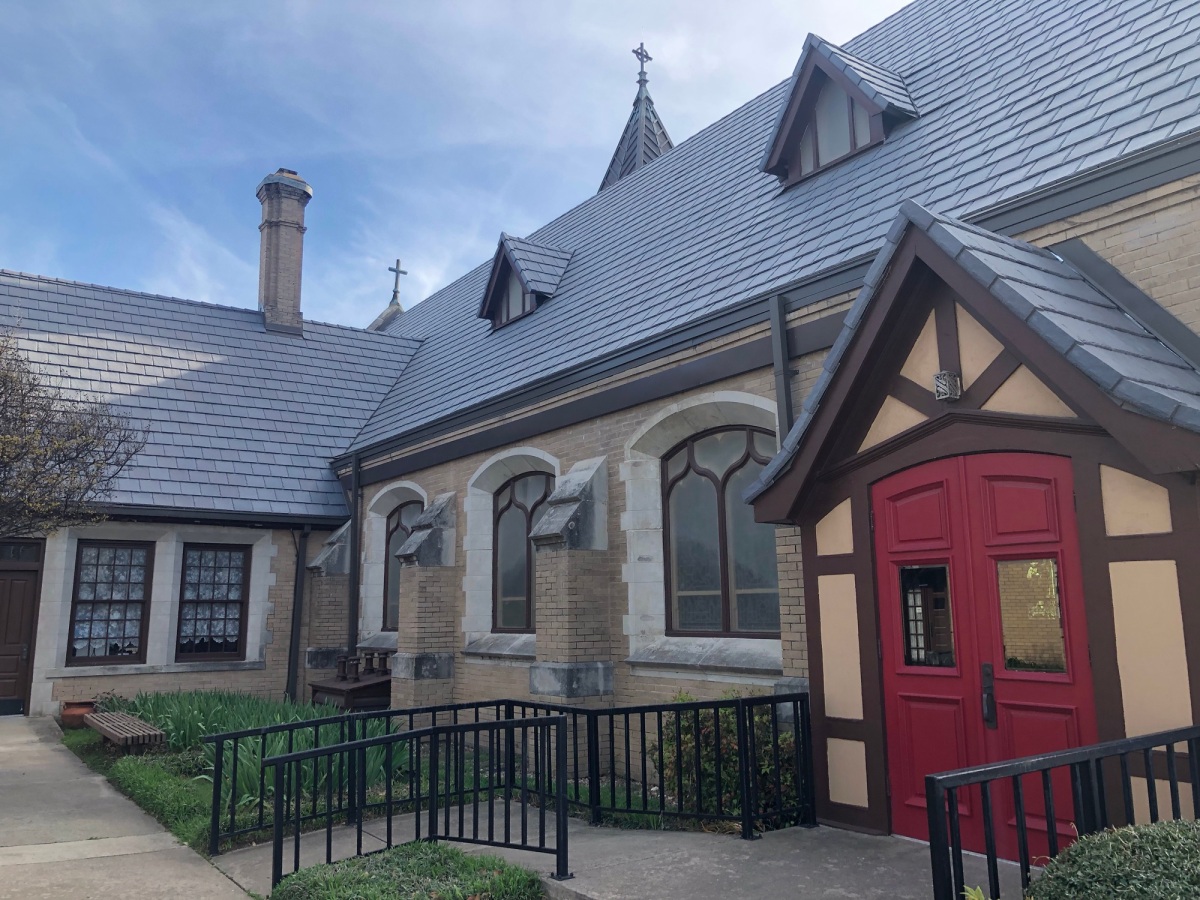
This sermon was originally preached at Saint Stephen’s Episcopal Church in Sherman, Texas.
Sunday, December 1. So… the countdown begins.
24 days til Christmas.
We’ve made it through Thanksgiving and Black Friday. And now, we turn toward Christmas.
For most of us, the holiday season passes in a blur: there are parties and events to attend, gifts to buy, family to host. And so often in December we get the feeling that “There’s never enough time.” In our culture especially, there’s a frenzy to the holiday season, a sense that we have to do as much as possible. It’s that sense of FOMO, Fear of Missing Out. We don’t want to miss out on any experiences worth having. So we pack our calendars as full as we can, since Christmas only comes once a year.
If there were two months between Thanksgiving and Christmas, maybe it would be manageable. Maybe we’d have the time to do all the things we want to do. But as it is, we feel that we’re running out of time. And when Christmas arrives, perhaps we feel that it’s come too soon.
This sense, that time has run out, that there wasn’t enough time to prepare, is key to today’s Gospel reading: Jesus’ triumphal entry into Jerusalem on Palm Sunday.
Now some of you may be thinking, “Why are we hearing about Palm Sunday on the First Sunday of Advent? I don’t remember that.”
Starting this Sunday, we’re going to be following the readings from the 1928 Book of Common Prayer, which is basically the historic lectionary of the Church of England. This lectionary has its roots in the Middle Ages. So if you were an Englishman in the 1300s and you came to church on the First Sunday of Advent, you’d hear this Epistle reading from Romans and this Gospel reading from Matthew. (And that’s something to keep in mind as we go through this church year, that the readings you’ll be hearing on Sunday are the ones Christians have been hearing for centuries).
But the reason this Gospel is appointed for the First Sunday of Advent is found in the proclamation of the prophet Zechariah: “Behold thy King cometh unto thee.” And the crowd meets Jesus as he arrives, exclaiming, “Blessed is he who comes in the Name of the Lord!”
This is the major theme of Advent: The coming of Christ, his arrival, whether we’re ready or not.
And when Our Lord arrived in Jerusalem, the people were not ready. As the Lord said, they did not recognize the time of their visitation.
They had three years during his ministry to prepare for the arrival of the Messiah, but they were not ready in heart to receive him. And so, the crowd that hailed him as King on Sunday was clamoring for his crucifixion by Friday.
This brings to us the question: Are we ready for the coming of Christ? If Christ were to return today, would we be ready to meet him? If Christ were to return today and judge us, just as we are, would we be able to say that our lives are in order? For most of us, the answer is probably not.
“Woe to you who desire the Day of the Lord! Why would you want the Day of the Lord? It would be darkness and not light” (Amos 5:18).
Almost all of us, if we are honest, have not truly repented of our sins. We have not ordered our lives to prioritize the things of God. We do not love others as we should. In general, we are not living the Christian lives we should be.
So this realization should create in us a sense of urgency. We must prepare. There’s no time to lose. As St. Paul says, “It is high time for us to wake from sleep.” So we hasten to “cast away the works of darkness,” to stop doing anything that’s hidden or shameful, anything we would do in the cover of night. We cast away the works of darkness so we can live honorably, as in the day, in the light. Like the Lord who casts the money changers out of the Temple, so we cast out our sinful passions so that we may be a holy temple to the Lord.
And if we really plan to do this, we must go against the grain of what the rest of the culture is doing. For Christians, the next twenty-four days should be a time, not for drunkenness and over-indulgence, but for sobriety and moderation.
Advent should be a time of fasting, not feasting. We feast at Christmas. But now, we curb our appetites to prepare ourselves. Because anyone will tell you, it’s hard to think straight and to have energy when you eat too much. You wanna take a nap or slump down on the couch. So in Advent we eat less, we forgo certain indulgences, so we can be freed up— so both our mind and body can be lighter and able to move quicker and act with more clarity.
And as for our busy schedules, there is an opportunity here as well. We can use this season to make time for spiritual activities, and not just recreational ones. So many of us have that sense of frenzy I mentioned earlier when we’re making plans: “They’re having the Christmas lights, and then we gotta go to this party, and then we gotta go to this event on the 12th…”
Imagine if we had that same eagerness for spiritual activities! What if we had that sense of urgency to create time for prayer and reading of Scripture, for devotions that help us to draw nearer to the Lord? Because after all, Advent only comes once a year.
And all of these spiritual disciplines– the fasting, the prayer, the times for quiet reflection– are not an end in themselves. They have a purpose: they help prepare us to meet Christ. For if the major theme of Advent is the coming of Christ, its hidden wisdom is the truth that Christ is not what we thought he would be. The people of Jerusalem did not expect the Messiah to be like Jesus. And we may have our own ideas of what Jesus is like. But he has a way of surprising us. The Lord is both more loving and more severe than we could have imagined. More demanding and more forgiving than we could have expected. As C.S. Lewis said, “Aslan is not a tame lion. But He is good.”
Advent is a time to discover Jesus anew, to be stirred in spirit and to ask, along with the people of Jerusalem, “Who is this?” To the extent that we enter the spirit of the Advent season, Christ will reveal Himself to us… and he will be more than we ever imagined, and in ways we did not expect.
So, beloved. Let us wake up and await with expectation the coming of the Lord. Let us cast away the works of darkness and put on the armor of light… or better still, let us put on the Lord Jesus Christ, and make no provision to gratify the desires of the flesh.
Behold our King cometh unto us. Let us prepare in heart and mind and body to meet him. Amen.
 The Pulpit and the Altar